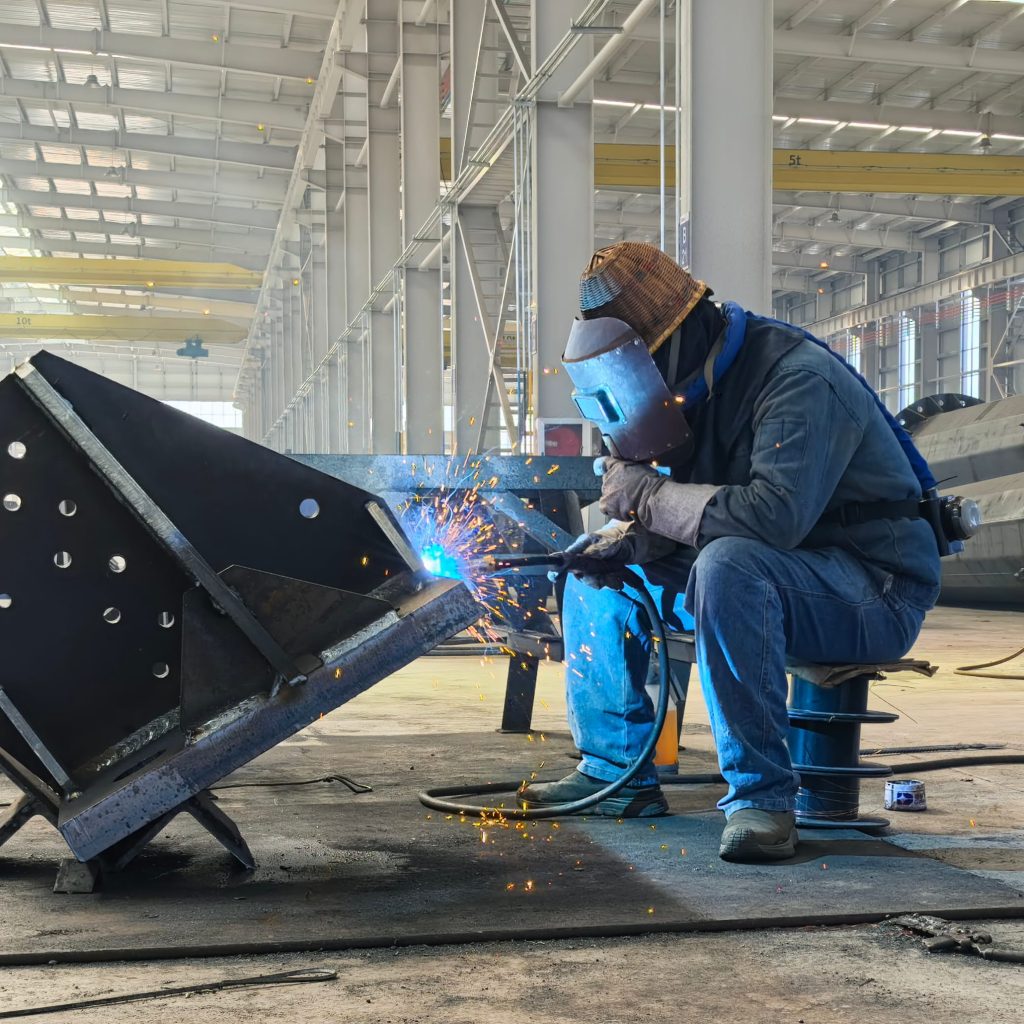
The fabrication of telecom towers is a critical step in the infrastructure lifecycle, determining the safety, durability, and reliability of communication networks. Whether for monopole, lattice, or self-supporting towers, a well-organized fabrication process ensures that towers meet international standards and withstand environmental challenges.
This article provides a comprehensive guide to the telecom tower fabrication process, including design, material selection, steel processing, assembly, quality control, and preparation for transportation and deployment.
1. Design and Engineering
The fabrication process starts with detailed structural and electrical design. Key considerations include:
- Tower type (monopole, lattice, self-supporting)
- Height and load requirements
- Antenna configuration and capacity
- Wind load, seismic conditions, and environmental factors
- Compliance with IEC, ISO, and local utility standards
2. Material Selection
High-quality steel is essential for telecom tower fabrication. Selection criteria include:
- Steel grade and tensile strength
- Corrosion resistance (for galvanization)
- Compatibility with structural loads
- Durability for long-term outdoor exposure